
Our heritage
The History of Lipspeaking
Lipspeaking has a remarkable history stretching back more than seven decades.
Timeline
1948
The Beginning
Lipspeaking in England developed in Darlington in the North East in 1948.
Bill Snowden and Muriel Shepherd developed lipspeaking as a practical way of helping everyone participate in meetings of their local hard-of-hearing club.
Their approach allowed spoken information to be reproduced visually for people who relied on lipreading.
1950s
The Pioneers
Early pioneers demonstrated how much lipreading and lipspeaking could improve participation and independence for deafened and hard-of-hearing people.
- Muriel Shepherd
- Bill Snowden
- Douglas Maxwell
- Jesse Gibbs
- Vera Roberts
- Louisa Neate
- Eric Amon
- Bill Shield
1960s
Formal Training
Demand increased and more formal selection and training of lipspeakers developed.
Influential training courses were held at Burton Manor, with Gwen Cairns involved in teaching.
1970s
Developing Professional Skills
Formal training continued to develop and began preparing lipspeakers for an increasing range of situations outside traditional hard-of-hearing clubs.
1980s
Wider Training
Lipspeaking became increasingly professionalised, and was included within wider communication-support training.
1990s
Professional Recognition
National qualifications and professional standards continued to develop.
A recognised register of lipspeakers emerged, alongside increasingly consistent standards of professional service.
1992
The Formation of ALS
Glenda Bateman established the Association of Lipspeakers, bringing professional lipspeakers together to promote excellence in lipspeaking.
Professional development
Learning Together
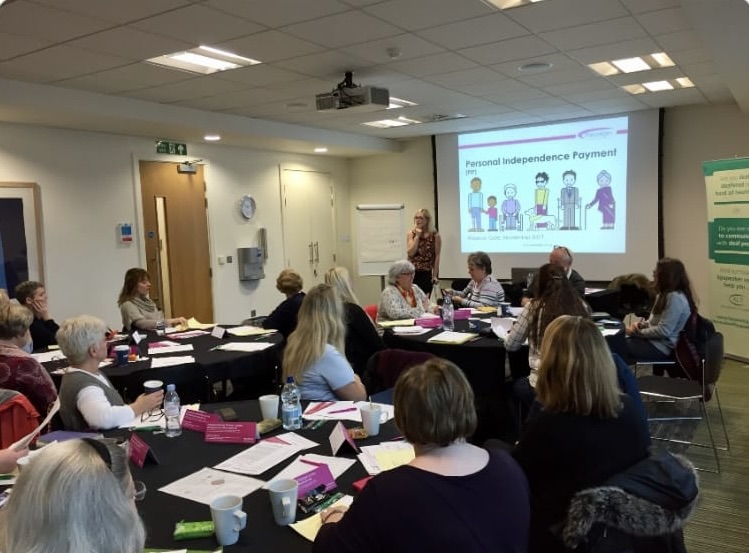
Training, workshops and shared professional knowledge have remained central to the development of lipspeaking and the work of ALS.
The Formation of ALS · 1992
The Association of Lipspeakers
In 1992, Glenda Bateman established the Association of Lipspeakers, creating a professional organisation dedicated specifically to lipspeaking.
ALS brought professional lipspeakers together to promote:
- Good practice
- Professional standards
- Professional development
- Awareness of lipspeaking
- Access to professional lipspeakers
From a practical idea developed in Darlington in 1948 to a recognised professional communication service, lipspeaking continues to make spoken communication visible.